
It’s easy to feel overwhelmed if you suffer a car accident injury. What you do in the first few moments can impact your safety, your recovery and your right to compensation.
What to Do Immediately After a Car Accident in Victoria
If you’ve been injured in a crash in Melbourne, Bendigo or elsewhere in Victoria, you should take the following steps when it is safe to do so:
- Move to a safe location out of traffic.
- Call for emergency services if anyone is injured.
- Seek medical attention, even if your injuries *seem* minor.
- Exchange information with the drivers involved (name, address, licence and registration numbers, insurance cover details).
- Take photos and video of the accident scene, damage to the vehicles and your injuries.
- Speak to witnesses and get their names and contact information.
- Report the accident to the police.
A Step-by-Step Guide to Car Accident Injury Claims in Victoria
Taking these steps can keep you safe immediately after the crash. It also ensures that your injuries are examined promptly and the accident is fully documented, both of which are vital for pursuing compensation after a car accident.
Each of the steps above involves key details that can affect your safety at the scene, the recovery from your injuries and the success of your accident claim. We discuss these steps in greater detail below:
1. Move to Safety
Use your judgement when determining whether it is safe to move. If you don’t feel safe operating your vehicle or getting out of the car, you should stay put. The same is true if your vehicle is rendered non-functional or it isn’t safe to drive.
Ultimately, the goal of moving out of traffic is to prevent secondary collisions. If moving poses more of a danger, it’s better to stay where you are.
2. Call for Emergency Services
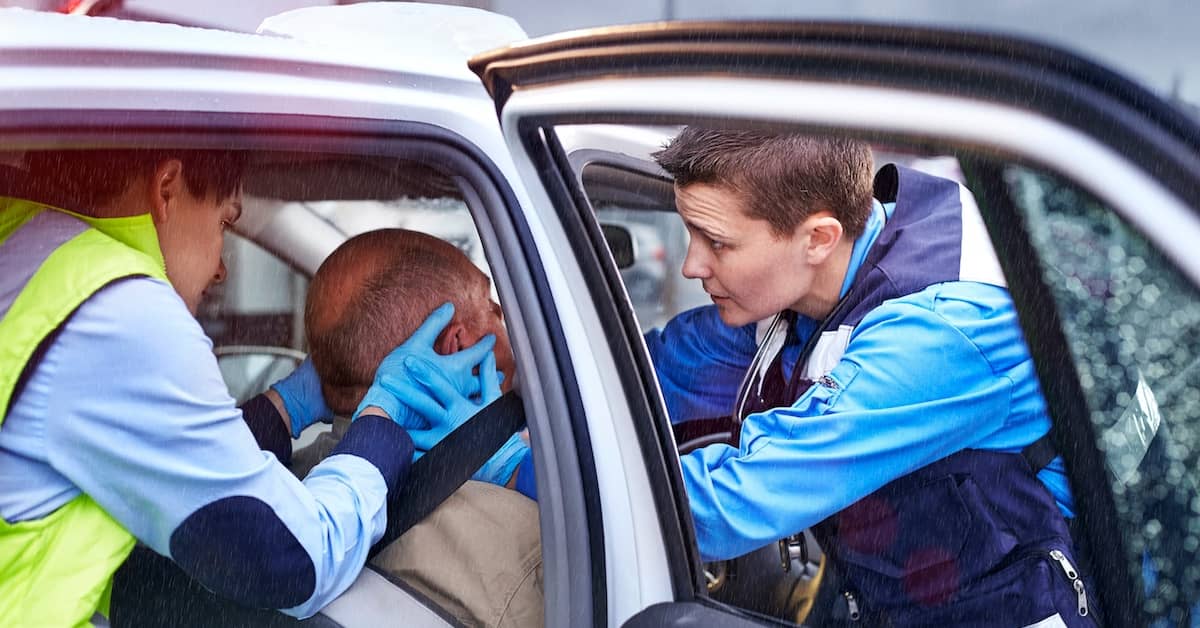
You should call emergency services immediately if anyone is injured. First responders such as paramedics, the fire brigade and law enforcement will attend the scene and provide necessary assistance.
Paramedics can assess car accident injuries that may not be immediately obvious, such as internal bleeding or head trauma. They can determine if any car accident injuries are serious enough to require transport to hospital.
In Victoria, police attendance is generally required if someone is injured in a motor vehicle accident. The police can also help manage traffic at the scene, preventing secondary crashes and keeping everyone safe.
Many people make the mistake of assuming that the accident or their injuries are not serious. This can create risks at the scene, lead to delays in medical treatment and result in the loss of crucial evidence.
3. Seek Medical Attention
There are two stages of seeking medical attention if you have been injured in a car accident:
- First, you should get checked out by paramedics at the scene. They may recommend that you be taken to hospital if your injuries are serious.
- Second, you should see a doctor or go to the local emergency room. If you are unsure where the closest emergency department is, healthdirect’s Service Finder can deliver results based on your postcode.
Do not assume you’re fine just because first responders cleared you at the scene. Some injuries have symptoms that take hours or even days to fully develop (such as whiplash or traumatic brain injury), at which point they may be serious.
Going to the doctor or emergency room ensures that injuries with delayed symptoms can be evaluated before they get worse. Detailed medical documentation is also important if you later make a claim with the Transport Accident Commission (TAC).
4. Exchange Information with Other Drivers
After a car accident, you are required to collect certain information from all of the drivers involved. This gives everyone an accurate record of the parties. It is also required information when making a TAC claim.
The information you need from each driver includes:
- Full name
- Address
- Phone number
- Driver licence number
- Vehicle registration number
Obtaining this information helps the TAC identify the vehicles involved and confirm that they are covered under Victoria’s registration system. This enables the TAC to properly assess and pay any entitlements after the accident.
5. Take Photos and Video of the Accident Scene
Photographs and video footage can capture key details following the crash. The most important things to capture include:
- Damage to any and all vehicles
- Multiple angles of the vehicles and their position in the roadway
- Road signs and traffic lights
- Skid marks, debris and other evidence of the accident
- Visible injuries
Keep photos and videos from the crash on your mobile. A car accident injury lawyer can review them as part of the initial evaluation and use them to prepare your claim.
6. Speak to Witnesses
Ask witnesses if they saw the accident and what they observed. They may consent to be recorded, in which case you would have audio to support your claim. At minimum, you should ask for each witness’s name and how to contact them if needed.
Witness testimony can be helpful for determining how the accident occurred and who was at fault. Having perspectives from multiple witnesses further strengthens your claim, so try to talk to as many people in the area as you can.
7. Report the Accident to the Police
Not every car accident in Victoria needs to be reported to the police. However, there are situations where reporting the accident to law enforcement is mandatory.
You must report the accident to police if:
- Someone is injured, even if the injury seems minor at the time.
- A driver fails to stop and exchange information.
- Personal property is damaged, and the owner is not present or details cannot be exchanged at the scene.
It is also best to notify the police if you suspect drink driving was a factor in the crash. Police officers can conduct breath and saliva tests to determine if the driver is intoxicated.
Arnold Dallas McPherson Injury Lawyers (ADM) have more than 30 years of experience handling TAC accident claims throughout Victoria. We are available 24/7 to take enquiries and discuss your legal options.
Call 1800 242 588 today for a FREE consultation. With ADM’s No Win, No Fee agreement, you pay nothing upfront and only have to pay professional costs if we get you a favourable outcome.
Are You Eligible for TAC Compensation After a Car Accident Injury?
Once you’ve dealt with the immediate aftermath of the crash, the next step is to understand what compensation you may be entitled to.
In Victoria, most people who are injured in road accidents can access benefits through the TAC. The TAC is a no-fault scheme, meaning certain entitlements are available regardless of who caused the accident.
You can generally claim compensation from the TAC if you suffer injury from the use or operation of a motor vehicle. This includes situations where you were a:
- Driver or passenger in a motor vehicle
- Motorcyclist
- Pedestrian
- Cyclist
- Passenger on public transport
Is There a Time Limit for TAC Claims?
There are time limits for making a TAC claim after a car accident injury. In most cases, you need to lodge a claim within 12 months of the accident. The TAC may accept claims up to three years after the collision, but the additional time is not guaranteed.
It is generally in your best interest to seek legal advice and lodge your claim as soon as possible.
What Can I Claim from the TAC After a Car Accident Injury?
Now that you know whether you are eligible to make a claim, the next step is to understand what the TAC covers.
You may be entitled to the following for injuries sustained in a Victoria car accident:
- Medical and treatment expenses: This includes hospital stays, visits to your GP, appointments with specialists, physio and other rehab.
- Income support: You are entitled to weekly income support payments if your injuries cause you to miss more than 5 days from work. A Certificate of Capacity is needed to maintain your eligibility for income support.
- Return to work support: The TAC can provide support and services to help you return to work, whether that is to your previous job or finding a new occupation.
- Impairment benefit: The impairment benefit is a one-off lump sum that compensates you for an injury causing permanent disability. Your injury or injuries need to meet a threshold for permanent impairment to qualify for this benefit.
When applying for the impairment benefit, you will need to undergo one or more medical examinations. Medical examiners issue reports that the TAC uses to determine if you qualify for the benefit.

Injured in Victoria?
ADM Is Here for You!
We’ll listen to your story and help you move forward with your life.
We are available 24/7
Can I Sue for a Car Accident?
You can claim additional damages from the TAC if you were seriously injured in a road accident caused by someone’s negligence. This is known as common law compensation. People in Victoria often think of this as ‘suing’, but it rarely involves going to Court the way you might expect.
The TAC recommends consulting a personal injury lawyer about your eligibility for common law damages. A skilled lawyer can evaluate how the accident occurred and identify whether another party was at fault. They can also review evidence to determine if your injuries are serious.
Once you have legal representation, common law compensation claims generally follow an orderly series of steps:
- Serious Injury Application: Your lawyer will apply to the TAC for a certificate that recognises you have a serious injury as defined by the TAC. This requires substantial medical evidence. You may need to attend medical assessments, as well as a conference with the TAC to resolve disputes.
- Claim Preparation: Once the TAC issues a Serious Injury Certificate, your lawyer will finalise your claim for common law damages. This involves assessing the long-term impact of the serious injury and calculating common law damages.
- Demand for Settlement: Your lawyer will submit a demand for compensation to the TAC for past and future loss of earnings, as well as pain and suffering.
- Settlement Negotiations: The TAC will likely make a counter-offer, which your lawyer will review with you. Additional negotiations may be necessary if the offer is unacceptable. You may be asked to attend a settlement conference to try to resolve the matter.
- Court Proceedings (if necessary): You may need to apply to the Court if the TAC doesn’t recognise that you have a serious injury. Taking the matter to Court may also be necessary if a fair settlement cannot be reached.
The most effective transport accident solicitors participate in the Common Law Protocols, a framework for resolving TAC claims efficiently. If you are suing for a car accident injury, you need a lawyer who is well-versed in these protocols and can advocate for you at every stage of the process.
Client Testimonials
At ADM, we are real people helping Victorians find justice. You don’t have to take our word for it; we have received hundreds of 5-star reviews from real clients who entrusted their legal matter to ADM. See for yourself what to expect from Arnold Dallas McPherson Injury Lawyers, both as solicitors and as human beings.

Michelle & R.


Kelsey and the team at ADM Bendigo were very understanding and caring in relation to our case. We were treated with respect and everything was done to get the best possible outcome under the circumstances. We would highly recommend.

Peter R.
My dealings with staff at ADMcP were at all times supportive, professional, and above all successful. They’re a great group and I recommend anyone to them for any industrial/workplace injury issues.

Milian T.
Thanks a lot Shaun and whole team, you done great job! Highly recommended this expert. All the best my friend!
Can You Claim TAC Benefits If the Accident Was Your Fault?
Most TAC benefits are paid on a no-fault basis, so you can claim entitlements even if you caused the accident. For instance, you would still be eligible for payment of medical expenses, income support and the impairment benefit (if your injuries qualify).
However, being at fault does affect your right to common law damages. The TAC follows a contributory negligence system in common law claims. Any damages you are due will be reduced by your percentage of fault.
For example: If your common law damages total $100,000 and you are found to be 10% at fault for the accident, you would only be entitled to $90,000 in compensation.
What NOT to Do If You Are Injured in a Car Accident
In addition to the steps you need to take after a car accident, there are certain mistakes to avoid. These include:
- Not seeking medical care straight away: Many people assume their injuries are minor and wait to seek treatment. This can delay your recovery, make it more difficult to link your injuries to the accident and complicate your TAC claim.
- Failing to report the accident to police: Not reporting the accident can lead to difficulties when lodging a TAC claim. It can also create legal issues, as failure to stop may violate Section 61 of the Road Safety Act 1986.
- Not collecting enough information at the scene: You shouldn’t rely solely on your memory to make a car accident claim. Missing details can lead to delays and make it difficult to access entitlements through the TAC.
- Assuming you can’t claim because you were at fault: The TAC is a no-fault scheme, so you shouldn’t assume that you can’t access payments if you believe you caused the crash.
- Delaying your TAC claim: Remember, you may only have 12 months from the date of the accident to lodge a claim. You risk losing entitlements if you wait too long.
- Downplaying your injuries: You may not get the treatment you need if you minimise your injuries when speaking to medical providers. Incomplete medical records can also undermine your claim and lead to disputes with the TAC.
- Trying to handle your claim without legal advice: A knowledgeable car accident injury lawyer can discuss the difference between no-fault benefits and common law damages and help you navigate disputes. Trying to handle matters on your own can result in unfavourable outcomes.
When Should I Speak to a Lawyer?
Ultimately, you should consult a lawyer if you are unsure what to do or you are concerned about making mistakes. Getting hurt in a car accident can be overwhelming, and you might not be sure what to do next.
Situations where you should definitely consider getting legal representation include:
- You were seriously hurt in the crash
- A member of your family was severely injured or tragically died
- You were unable to gather information or evidence at the scene
- The other driver left the scene of the accident
- You are unsure what benefits and other compensation you are entitled to
TAC accident lawyers in Victoria generally offer FREE consultations, giving you the opportunity to explore your legal rights without financial obligation. If you think legal advice would help you, don’t hesitate to discuss the matter with a local lawyer.
Contact ADM for FREE Today.
How to Lodge a TAC Claim After a Car Accident
Road accident claims can be lodged with the TAC online or over the phone. You can fill out the online claim lodgement form or call the TAC at 1300 654 329 Monday through Friday from 8:30am–5pm.
Details needed to make a claim include:
- The date, time and location of the accident
- Names and contact details for the drivers involved
- Registration numbers for all vehicles
- Details about your injuries, including medical evidence
- Information about your income, if you miss more than 5 days of work
The TAC will make a decision about your claim within 21 days. If they request additional information, you have 28 days to provide it. After you provide the requested information, the TAC has 14 days to accept or reject the claim.
Learn How Arnold Dallas McPherson Injury Lawyers Can Help
ADM has been serving the victims of road accidents since 1994. We have more than a dozen offices throughout Victoria, enabling us to serve clients in the Melbourne metro area, Bendigo and communities statewide.
We have detailed knowledge of the claims process. This has enabled us to obtain some of the largest recoveries in TAC matters. Our expertise and emphasis on personalised legal service allows us to advocate for maximum compensation, taking the unique circumstances of your car accident injury into account.