
Multiple parties may be held liable for a slip and fall accident in Victoria. This includes individuals and businesses, as well as local councils and public authorities. Understanding slip and fall accident liability is vital for determining whether you have a claim.
Arnold Dallas McPherson Injury Lawyers (ADM) offer expert legal guidance and support if you slip and fall on someone else’s property. Falls happen unexpectedly, and they can completely alter your life. Our lawyers provide you with honest legal insights and personalised care.
Call ADM at 1800 242 588 today for a FREE consultation. Our firm takes enquiries 24/7 from clients in Melbourne, Bendigo and communities throughout Victoria.
What Is a Slip and Fall Accident?
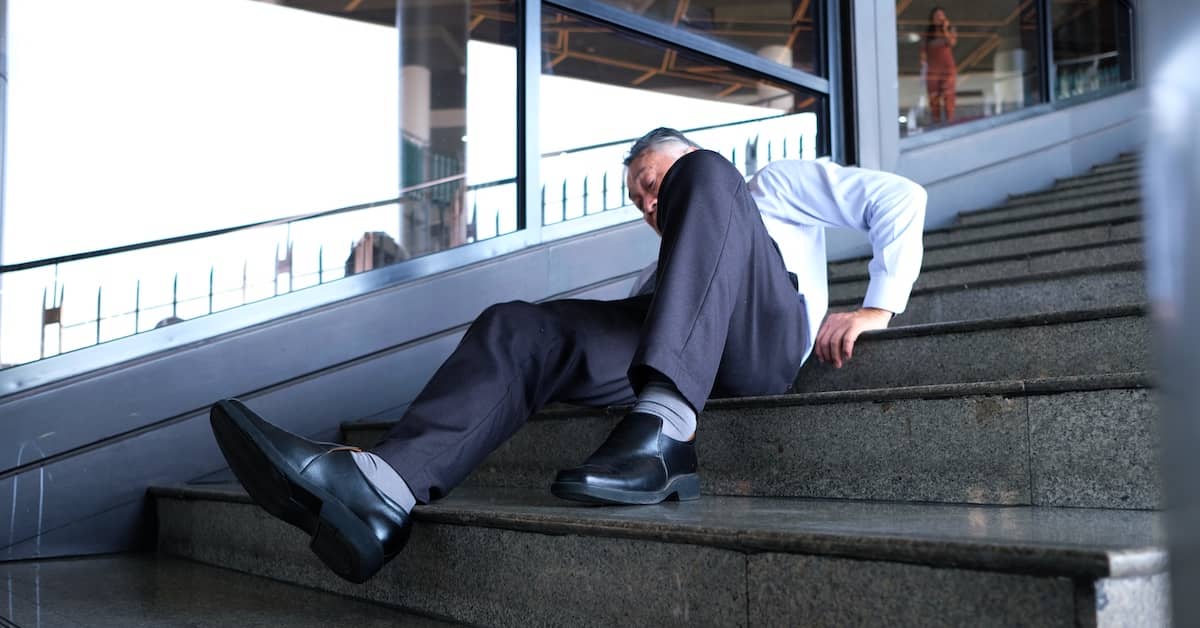
Before we talk about liability, you need to understand what a slip and fall accident is. Slip, trip and fall injuries may arise from a variety of different situations:
- Slipping on ice, spilled liquids, dry grains, produce or other hazards in a supermarket
- Tripping over merchandise and displays in a shopping centre
- Falling in a car park due to potholes, uneven ground, poor lighting or slippery pavement
- Losing your footing on electrical cables on a business property
- Having your feet fly out from under you due to loose carpeting, rugs or tiles
- Missing a step due to uneven stairs, broken handrails or obscured flooring
There are countless reasons someone may trip, slip and fall on another’s property. Many people attribute these incidents to their own clumsiness, or they don’t think anyone is at fault. However, if you are injured, it is worth speaking to a lawyer about your legal options.
What Is Liability in a Slip and Fall Accident Claim?
Liability means legal responsibility. In a slip and fall claim, it usually refers to a property owner or occupier’s obligation to ensure your safety on their property, which can give rise to a responsibility to compensate you for injuries and damages you sustain due to their negligence on their property.
How Do I Prove Liability?
In Victoria, slip and fall accident liability is based in negligence. Under the Wrongs Act 1958, you are required to prove four elements of negligence for your claim to succeed:
- The occupier owed you a ‘duty of care’. Duty of care is an obligation to take reasonable precautions against foreseeable risks of harm. For example, property owners and occupiers have a duty to keep their premises safe for lawful visitors. That generally includes the removal of slipping and tripping hazards.
- There was a breach of duty. Examples of a breach may include failing to clean up a spill, not posting warning signs about a hazard, delaying the replacement of light bulbs or not repairing old or defective flooring. These may constitute negligence on the part of the occupier.
- You were injured as a result of the breach. It is not enough to simply show that a hazard existed. You need to establish that your injuries were as a result of the occupier’s breach of duty. This element is known as causation, and it is arguably the point upon which your entire claim rests.
- You suffered damage from the slip and fall. Damage may include economic loss (medical expenses and lost earnings from work) as well as non-economic loss (pain and suffering, loss of enjoyment of life and loss of amenities).
Slip and fall accidents are often the basis of public liability claims. These are actions taken against an occupier, who is usually indemnified under a public liability insurance policy for payment of losses suffered by the victim due to injury on the property.

Injured in Victoria?
ADM Is Here for You!
We’ll listen to your story and help you move forward with your life.
We are available 24/7
Who Can Be Liable for a Slip and Fall Accident?
The occupier of the property is generally liable for slip and fall injuries. An occupier is a person or entity that exercises control over the premises and is legally responsible for its condition and safety.
Depending on the circumstances, the occupier responsible for a slip and fall accident may include:
- Homeowners (for incidents on private residential properties)
- Business Owners (e.g., supermarkets, restaurants, hotels, offices)
- Landlords and Property Managers (for incidents at apartments, townhouses, condominiums)
- Tenants and Lessees (provided they control and maintain the premises)
- Local Councils or Public Authorities (for incidents on public footpaths, in parks and in other public areas)
- Corporate Entities (such as those responsible for public utilities)
Owner vs Occupier: What’s the Difference?
In many cases, the owner and the occupier are two different parties.
For example: A Coles supermarket may operate as a tenant within a shopping centre. Coles may not own the building, but it is typically considered the occupier because it controls day-to-day operations, cleaning and maintenance. That means Coles would generally be responsible for hazards such as spills, cluttered aisles and unsafe flooring.
Meanwhile, the owner of the property may be liable for injuries sustained due to structural defects in the building or hazards outside the supermarket. This may include other areas, such as the car park, walkways or escalators, for example.
Both the owner and the occupier may share liability for a slip and fall accident. Assessing each party’s role in causing your injury is crucial for preparing an effective claim.
Public Spaces and Council Liability
The local council is generally responsible in claims involving public footpaths, parks, recreation facilities, community centres and other premises. If you slip and fall on public land or in a public building, the local council or another government entity may be liable.
Slip and fall accident liability claims against local councils are often more difficult than claims against private individuals and businesses. This is because public authorities in Victoria are granted additional legal protections.
Victoria law recognises that councils and other authorities have numerous functions and limited resources. As such, it may be impracticable for them to fix hazards immediately.
You will need to prove:
- The local council knew, or ought to have reasonably known, about the hazard.
AND - The council had the procedures and resources to remedy the danger.
BUT - It failed to take action within a reasonable timeframe.
These elements can be difficult to prove on your own. Skilled legal representation is often essential for holding a local council or public authority accountable for slip and fall accidents.
What If I Was Partly At Fault?
You can still bring a claim for a slip and fall accident if you are partly at fault. However, principles of contributory negligence will apply, which can reduce the compensation that is payable to you.
Any compensation you are due will be reduced according to your share of responsibility for the incident. Contributory negligence is calculated as a percentage of overall fault for the incident.
For example, say you slip and fall at the local Woolworths and suffer $100,000 in damages. Woolworths failed to clean up a spill or post a warning sign, but you were looking at your phone when you fell. A court may find that the supermarket was 90% at fault and you were 10% at fault, in which case the maximum amount you could recover is only $90,000.
Occupiers and their insurers often dispute public liability claims on the basis of contributory negligence. They may also try to argue that the hazard represented an ‘obvious risk’ that you should have been able to avoid. Experienced lawyers will anticipate these defences and be prepared to counter them with strong evidence.
Client Testimonials
At ADM, we are real people helping Victorians find justice. You don’t have to take our word for it; we have received hundreds of 5-star reviews from real clients who entrusted their legal matter to ADM. See for yourself what to expect from Arnold Dallas McPherson Injury Lawyers, both as solicitors and as human beings.

Michelle & R.


Kelsey and the team at ADM Bendigo were very understanding and caring in relation to our case. We were treated with respect and everything was done to get the best possible outcome under the circumstances. We would highly recommend.

Peter R.
My dealings with staff at ADMcP were at all times supportive, professional, and above all successful. They’re a great group and I recommend anyone to them for any industrial/workplace injury issues.

Milian T.
Thanks a lot Shaun and whole team, you done great job! Highly recommended this expert. All the best my friend!
What Evidence Do I Need to Prove Slip and Fall Accident Liability?
Multiple forms of evidence can support your claim and help you prove liability for a slip and fall accident. These can include:
- Photographs and video of the slipping or tripping hazard
- Footage from surveillance cameras on the premises
- A copy of the incident report filed with the occupier
- Witness statements from people who saw you fall
- Cleaning and maintenance records
- Inspection reports for the property
- Prior complaints of the same hazard
In addition to proving slip and fall accident liability, you need evidence of your losses. Medical bills, payslips and receipts for out-of-pocket expenses help to show the financial toll of your injuries.
You will also need strong medical evidence. This includes reports from doctors and hospitals, diagnostic imaging and records of your treatment and rehabilitation. Comprehensive medical records can prove that your injuries were caused by the slip and fall, as well as support your entitlement to non-economic damages.
Lawyers assist with obtaining this information as evidence to build your case.
Are You Entitled to Non-Economic Damages for a Slip and Fall?
In Victoria, compensation for non-economic loss is only available if you suffer a ‘significant injury’. Some injuries are automatically considered significant, but most need to meet certain thresholds for permanent impairment.
You may need to attend specialised medical assessments to have your injuries evaluated. Specially trained medical practitioners will examine you and issue a Certificate of Assessment stating whether you meet the applicable threshold.
If you have a significant injury from a slip and fall, a qualified lawyer can calculate your public liability claim payout.
Get Help with Your Slip and Fall Accident Claim
ADM understands the many different scenarios that can lead to slips, trips and falls. Our lawyers provide expert advice in Victoria public liability matters. We care not only about the outcome of your claim, but your recovery and peace of mind. You can count on ADM to offer clarity and reassurance so you can exercise your legal rights with confidence.
Multiple lawyers at our firm are Law Institute of Victoria Accredited Specialists in Personal Injury Law. This distinction highlights ADM’s emphasis on excellent legal service, as well as our high standards of professionalism and commitment to doing what’s right.
ADM serves clients in Melbourne, Bendigo and other communities from more than a dozen offices statewide. Call 1800 242 588 today for a FREE consultation with a slip and fall accident lawyer.